Collated Coil Nail Buying Guide
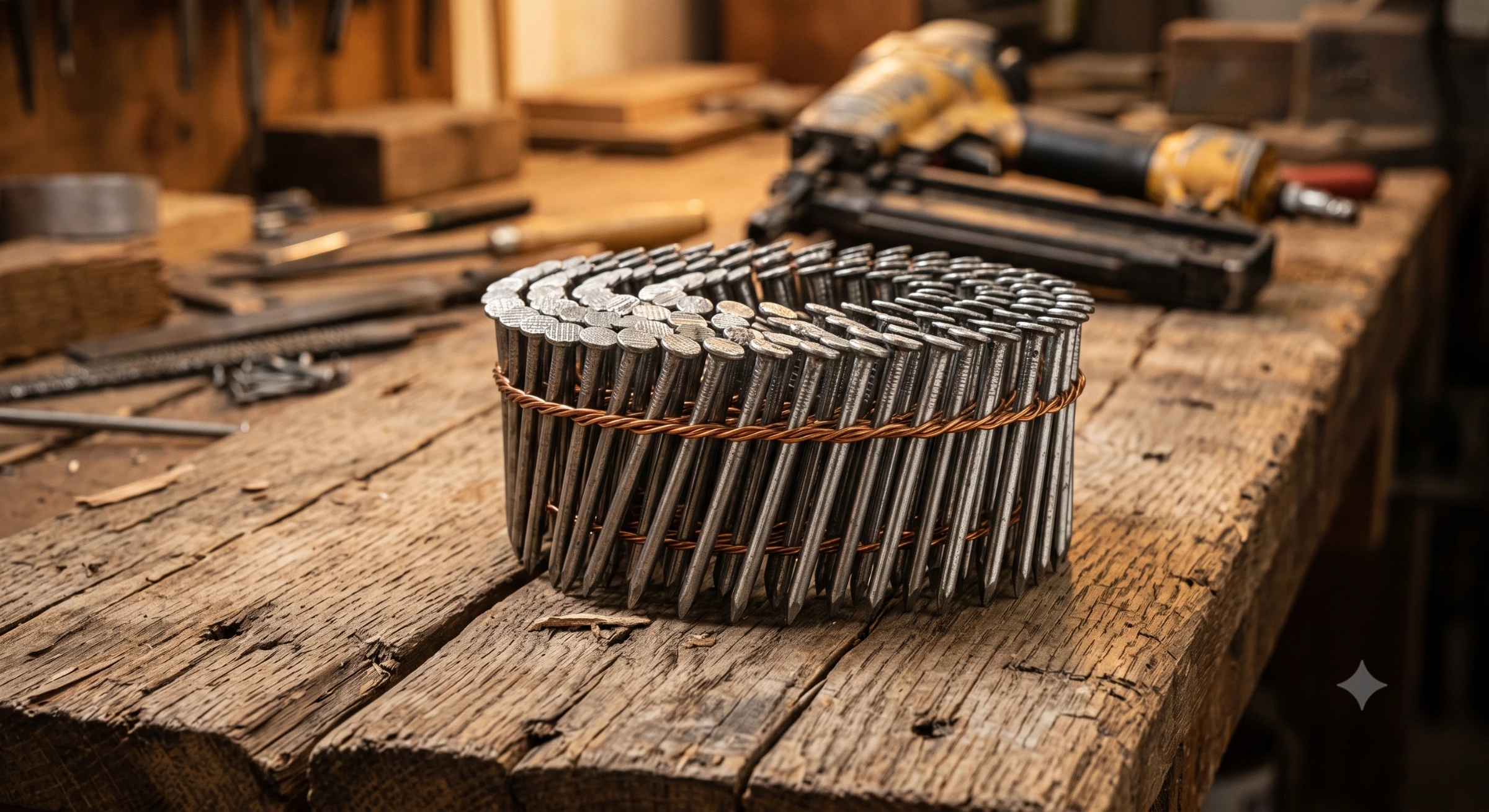
One of the most important consumables that fully unlock the performance of pneumatic nail guns is wire-collated coil nails. Widely used in pallet manufacturing, roofing, wooden crate production, and exterior cladding, these nails are welded together with wire at a specific angle (typically 15°) and wound into a coil.
With hundreds of options available, how do you choose the right collated coil nail for your project? Here's a comprehensive guide for professionals.
1. Choosing the Right Shank Type
The shank design is the key factor that determines how securely the nail holds in the wood. Choosing the wrong type may lead to structural failure over time.
| Shank Type | Holding Power | Recommended Applications | Features |
|---|---|---|---|
| Smooth | Standard | General carpentry, light framing | The fastest-driving nail type, but offers lower withdrawal resistance than other options. |
| Ring Shank | Very High | Pallet manufacturing, roofing, flooring | Creates a screw-like holding effect by gripping wood fibers, making removal extremely difficult. |
| Screw (Twist) Shank | High | Hardwood applications, pallet repair | Rotates as it penetrates the wood, providing excellent holding power while reducing the risk of wood splitting. |
2. Why Coating and Material Matter
The environment where the nails will be used (indoor/outdoor, humidity, weather exposure) directly affects the material choice. Rust not only impacts appearance but can also accelerate wood deterioration.
Bright Steel (Uncoated)
Suitable only for indoor applications where moisture exposure is minimal. It is the most economical option.
Electro Galvanized (EG)
Features a thin zinc coating that provides protection against light moisture. Suitable for indoor pallets and sheltered environments but not recommended for continuous outdoor exposure.
Hot-Dip Galvanized (HDG)
Provides outstanding corrosion resistance for outdoor construction, pressure-treated lumber, and coastal environments.
Stainless Steel (Grade 304 / 316)
The ideal solution for the harshest environments involving moisture, salt, or chemicals, such as boat building or cedar wood applications. It will not rust.
3. Nail Length and Diameter
The nail size should always match the thickness of the materials being joined.
General Rule: The nail length should be approximately 2.5 to 3 times the thickness of the top material.
Otherwise, sufficient holding strength cannot be achieved.
Also, always verify your pneumatic nail gun's magazine capacity and supported nail diameter range (e.g., 2.1 mm – 2.5 mm). Using incompatible nail diameters may cause frequent nail jams.
💡 Expert Tip
If you manufacture or repair pallets, always choose Ring Shank or Screw Shank collated coil nails. Vibrations during transportation may cause smooth shank nails to loosen over time.
Conclusion
Choosing the right collated coil nail:
- Reduces installation time
- Minimizes material waste
- Improves the quality of wooden products
- Provides stronger and longer-lasting connections
When selecting your nails, always consider your nail gun's specifications, the wood type, and the intended application environment.
Browse our selection of collated coil nails to find the perfect solution for your next project.
Quote and contact
Share product group, dimensions and delivery details. The team can contact you with the right offer.
Request Quote